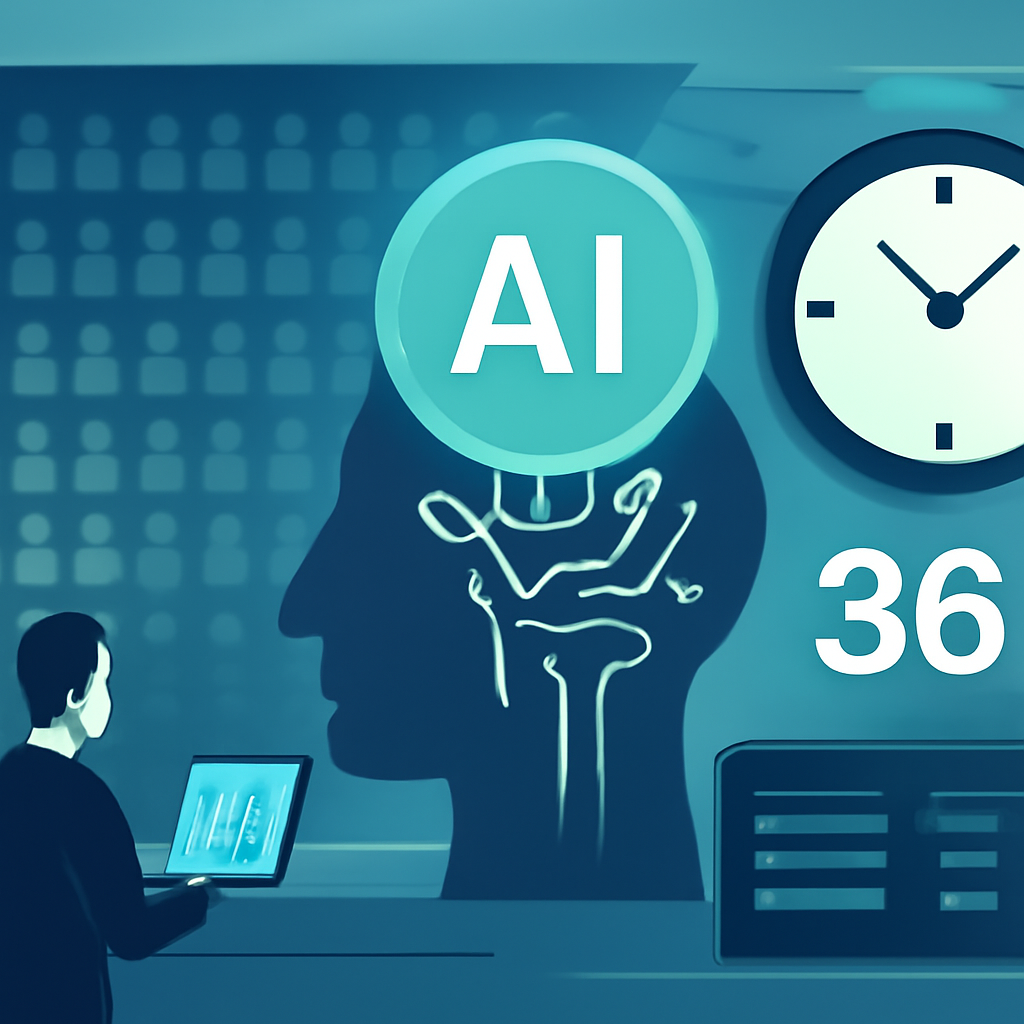
Third Moment Research operates a fleet of 10,000 agents in parallel to carry out multi-day investigations, combining a suite of OpenAI models with a tool-rich execution environment and automated security checks. The lab’s platform is designed to sustain runs of roughly 36–48 hours, allowing agents to explore complex quantitative research tasks, iterate on failures and surface unexpected findings while keeping token usage and runtime efficient.
The system pairs Codex with members of the GPT‑6 family—GPT‑6 Astra, GPT‑6 Sol and GPT‑6.1 Sol—plus a testing stack that includes Daybreak for automated security validation. Agents execute inside Dockerized environments provisioned with large datasets (the firm supplies a terabyte of historical data in its quantitative setups), documentation and a research repository containing modules for feature engineering, GPU-enabled model training, trading strategies and backtesting. This combination of models, data and tooling forms the backbone of Third Moment’s long-running investigations.
Third Moment treats Codex as a practical action layer or “harness.” In this configuration Codex enables agents to perform concrete steps: take actions on the codebase, draft executable plans, set objectives, spawn subagents and compact context as an investigation unfolds. The GPT‑6 models operate as higher-level reasoners, orchestrating broader research directions and inspecting outcomes. For interrupted tasks, the lab runs Codex as a subagent within an outer harness powered by GPT‑6 Sol or GPT‑6.1 Sol; the outer layer inspects incomplete trajectories and decides whether to retry, terminate or escalate to a human researcher.
A key motivation for this layered approach was reducing unnecessary runtime and token waste. Profiling a backtest on a year of order-level U.S. equity data revealed that agents spent hours repeatedly polling for completion, which inflated token consumption and polluted context windows. Codex analyzed simulation traces, timestamps and the codebase and recommended a caching optimization and a memory-packing technique. After testing and deploying the fixes, the team reduced a multi-hour backtest to roughly three to five minutes. That dramatic speedup lowered token use and freed agent context for additional experiments.
Advances in model capabilities from GPT‑5.5 through GPT‑6.1 have shifted agents from strictly following user-prescribed experiments to autonomously generating follow-ups based on intermediate results. With GPT‑6 Astra, GPT‑6 Sol and GPT‑6.1 Sol working alongside the Codex harness, agents can probe root causes by running hundreds of parallel experiments using spawned subagents. This autonomy has produced discoveries the human team did not initially anticipate: in one session, GPT‑6.1 Sol identified an outsized effect of non-displayed trades on an exchange, a phenomenon the researchers had not foreseen. As co-founder Adam Khakhar observed, “In a single session, GPT-6.1 Sol is able to maintain a coherent thread of computational research across days of compute without losing the plot.”
Third Moment evaluates models across optimization, ML systems and quantitative research tasks at high reasoning settings. The firm reports that GPT‑6.1 Sol is their most-used model for token-efficient performance, while GPT‑6 Astra has produced the largest runtime speedups on certain benchmarks. Co-founder Jeffrey Yan said, “GPT-6.1 Sol is currently our most-used model given its token efficiency. It completes tasks with the fewest tokens while delivering performance similar to GPT-6 Astra.” The team also experiments with other models such as GPT‑6 Luna and GPT‑5.6 Terra for cost- or efficiency-sensitive workloads.
Scaling tens of thousands of agents requires rigorous security validation. Third Moment integrates Daybreak to run penetration-style checks before simulations begin, verifying that agents cannot escape sandboxed environments or access broader networks. Khakhar emphasized the importance of this automation: “By using Daybreak, we’re able to have agents themselves do penetration testing on the simulation and test the infrastructure and security of it. Without Daybreak, we would not be able to autonomously test this at scale.”
Looking ahead, Third Moment’s roadmap moves from isolated investigations toward coordinating hundreds of thousands of specialized subagents in chains of dependent experiments supported by trillions of tokens. The firm aims to enable agents that improve themselves as new issues arise, letting humans focus on designing and optimizing research rather than performing routine experimentation. As Khakhar put it, “Humans can be in a much more leveraged position, where they can think about how to do research and optimize the research itself instead of actually doing the research.”
By combining model-driven reasoning, a Codex action harness, dataset-rich containers and automated security testing, Third Moment Research demonstrates a practical architecture for long-running, large-scale agent deployments in domains where iterative progress is measurable and improvable. The team’s approach shows how careful tool design and profiling can reduce runtime and token waste, enabling 10,000 agents to sustain coherent, multi-day investigations at scale.
Source: Read the original source
Leave a Reply