Franklin Templeton is deploying OpenAI tools to build a connected intelligence layer that combines automated insight generation with human judgment to support portfolio managers and analysts. The initiative began in equity research and has progressed from early experiments to production-focused pilots that integrate research, risk, compliance and trading inputs into a unified, role-specific set of workflows.
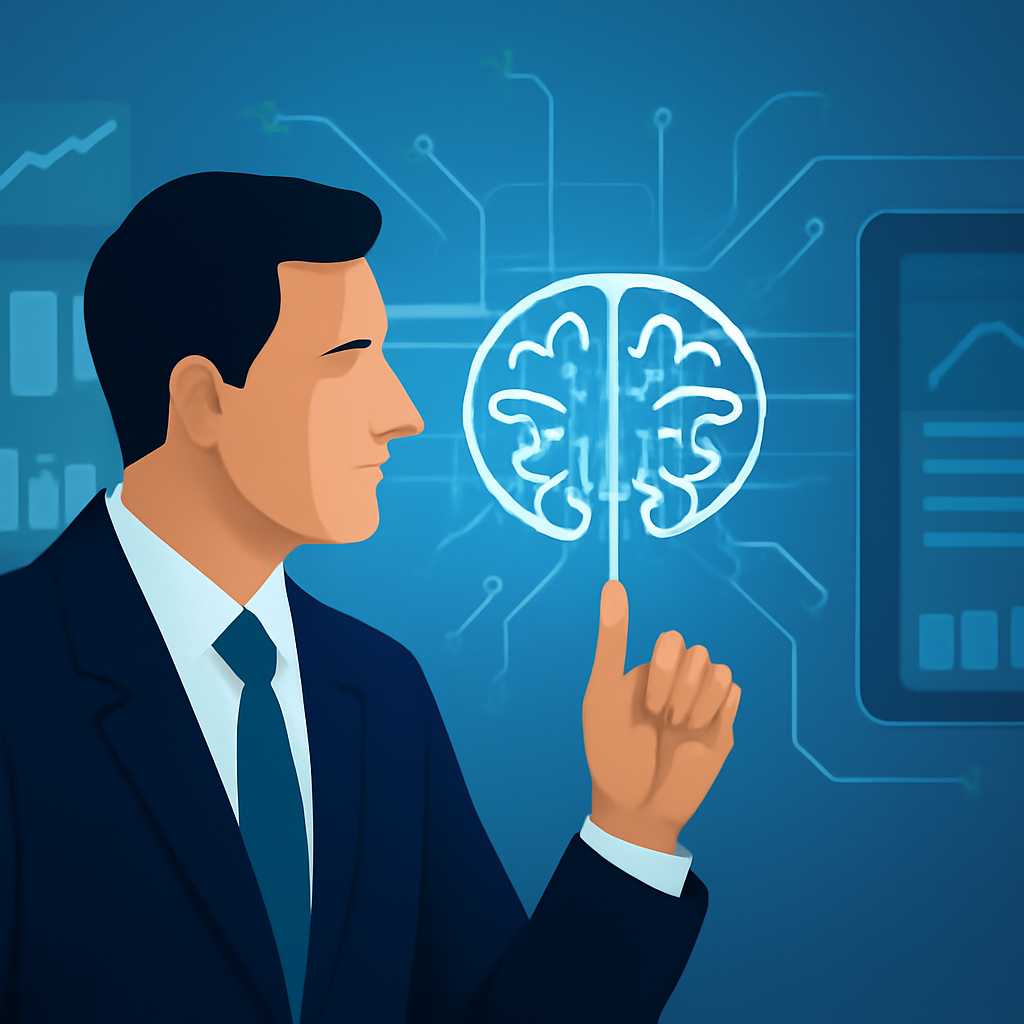
Early trials at the asset manager involved placing datasets in a database and connecting models directly to that data, but those efforts did not capture the relationships between disparate data sources. To address that gap, the team introduced agents and a semantic layer — a structured model that maps what the firm’s data means and how it is linked. Using Codex alongside other OpenAI tools, Franklin Templeton built what it describes as a connected intelligence layer that brings contextualized data into models and surfaces actionable findings for investment teams.
Katrina Dudley, Senior Vice President, Public Market Investments at Franklin Templeton, framed the change as more than automation. She said the firm has moved from AI simply automating human-led processes to AI that “automating the ability to surface intelligent insights,” and that the intelligence layer coupled with human judgment is a powerful unlock. That framing underscores the project’s hybrid approach: automated synthesis and signal-generation plus analyst oversight and interpretation.
A key design goal for the connected intelligence layer is to produce consolidated, timely insights rather than separate, sequential outputs from different teams. By integrating inputs from research, risk, compliance and trading, the platform aims to present portfolio managers with a single, coherent stream of findings so decision-makers can compare research views, surface risks and streamline workflows without toggling between siloed outputs.
To develop tools tailored to specific roles, Franklin Templeton has run hackathons and labs that pair subject-matter experts with investment practitioners. These sessions used Codex to prototype functionality and refine workflows for analysts and portfolio managers. Internal champions for investment AI are working to transition prototypes into production-ready systems. That migration path involves security reviews, expert support and formal data controls intended to ensure tools meet firm standards before wider deployment.
The firm stresses that its approach emphasizes diversity of views and risk awareness. Franklin Templeton warns against generic personalization techniques that can narrow perspectives by reinforcing existing preferences and thereby introduce bias. Instead, the firm wants AI to surface alternate research and viewpoints to reduce the risk of homogenous thinking. Dudley highlighted the importance of risk-aware outputs, saying that a strong investment idea should also analyze and make portfolio managers aware of potential risks.
Human judgment remains central to the program’s design. Franklin Templeton expects analysts to continue fieldwork and qualitative research, bringing those insights back to teams to complement signals produced by the AI layer. The firm anticipates that the connected intelligence layer will allow analysts to spend more time engaging with experts and less time on repetitive information processing, while preserving final decision authority within investment teams.
Operational practices and governance are also central to Franklin Templeton’s rollout. Leadership encourages experimentation within defined guardrails, recognizing that not every pilot will succeed but that each should yield lessons to improve capabilities. New technologies are moved into practical labs soon after release so teams can evaluate fit, and training is provided to help users understand potential and limitations. Security reviews, expert support and formal data agreements form part of the control framework used to transition experiments into production.
Franklin Templeton’s work with OpenAI reflects a broader trend in asset management to combine automated intelligence with human expertise. The firm’s emphasis on connected data models, role-specific workflows, risk-aware outputs and controlled rollouts illustrates a pragmatic path for integrating AI into core investment functions. As the organization moves tools from hackathons and labs into governed workflows, its stated aim is to make these capabilities accessible across analysts and investment leaders while preserving the central role of human judgment.
The project remains an evolution from early experimentation to carefully governed deployment. By weaving data, models and human oversight together, Franklin Templeton seeks to deliver a practical platform that surfaces richer investment insights and helps teams make more informed decisions.
Source: Read the original source
Leave a Reply