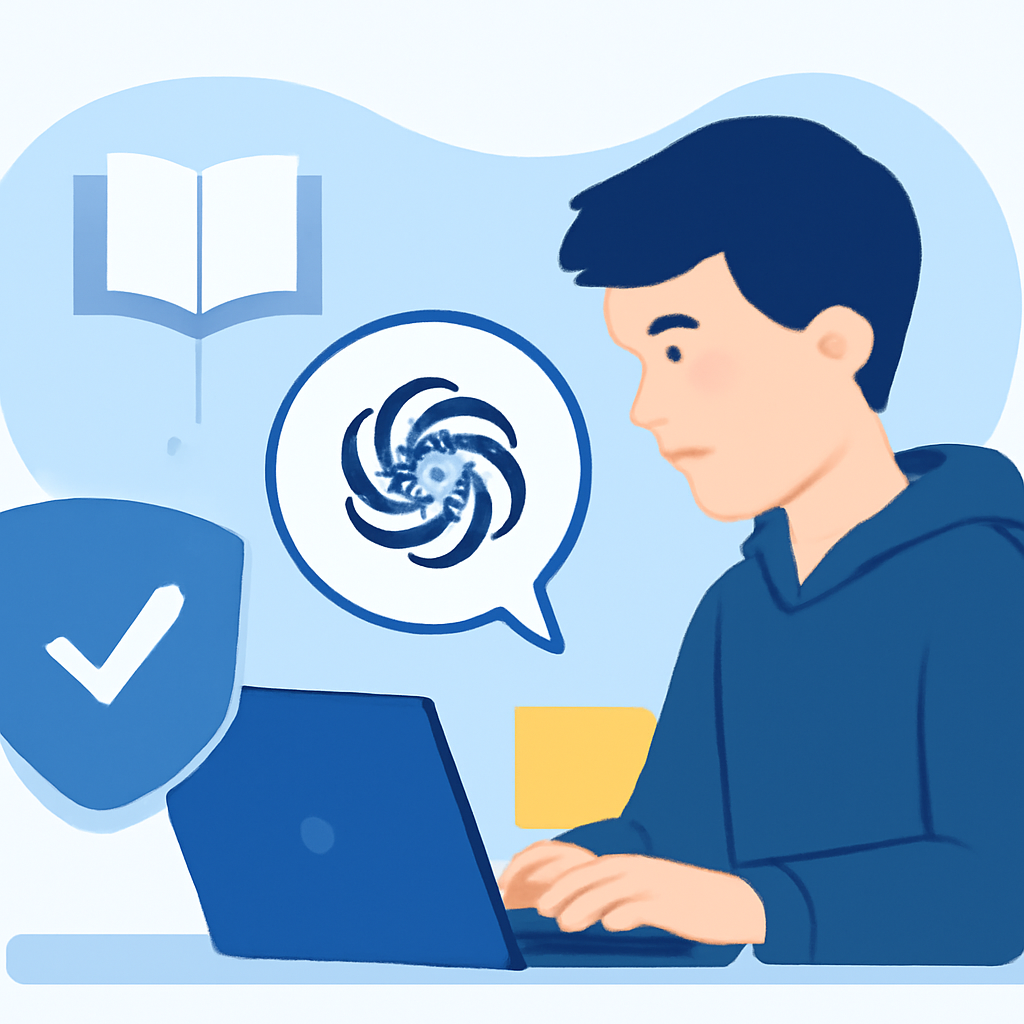
OpenAI has introduced ChatGPT for Teens, a tailored experience that aims to support adolescent learning while applying stronger default safeguards and family controls. OpenAI says users it estimates to be under 18, or those who report an age between 13 and 17, are automatically placed into this teen experience. The product centers on educational tools and healthy-use features designed with input from teachers, scientists and pedagogy experts.
At the heart of the offering is Study Mode, a set of learning-oriented behaviors and prompts intended to encourage active engagement rather than quick answers. Study Mode incorporates learning-science techniques such as guiding questions, scaffolding, metacognitive prompts and knowledge checks. OpenAI frames these elements as encouraging active retrieval and self-explanation, approaches linked by education research to better comprehension and retention.
Study Mode is supported by practical routines and assessment tools. Study Hours lets teens or their parents schedule times when Study Mode is enabled by default. Quizzes and Learning Visualizations provide opportunities for practice and checking understanding, while responsible homework reminders can detect attempts to shortcut assignments and redirect students toward step-by-step problem solving. OpenAI positions ChatGPT for Teens as distinct from ChatGPT for Teachers, which is designed for institution-managed classroom use and offers additional classroom controls for educators.
OpenAI also announced a partnership with CodeAI to provide students and teachers with resources about how AI works and how to direct, question and create with it. The collaboration emphasizes instruction that surrounds the technology and the role educators play in shaping responsible classroom and out-of-classroom use.
To illustrate the kinds of student learning and projects it hopes to enable, OpenAI highlighted several teen-led initiatives. One team in Virginia prototyped WiFind, a search-and-rescue concept that uses existing Wi-Fi signals to help locate survivors in disaster scenarios. In Texas, a developer used ChatGPT to expand Audemy, an audio-based educational games platform for blind students, broadening its audience and game variety. OpenAI presents these examples as demonstrations of teens using AI to learn, prototype and apply skills to community problems.
Privacy and content safeguards are central to the teen experience. For users under 18, ChatGPT for Teens applies protections meant to reduce exposure to harmful or developmentally inappropriate content while maintaining opportunities for learning and creativity. These safeguards follow OpenAI’s Under-18 Principles and address higher-risk categories including self-harm, violence, eating disorders, dangerous activities, and explicit sexual or graphic content.
Family tools are integrated into the experience so parents with linked teen accounts can set Quiet Hours, manage selected settings, and receive safety notifications in specified high-risk situations. OpenAI said it is expanding notifications related to eating disorders while limiting the scope of shared information to focus on moments where offline support may matter most.
The product also aims to support healthy boundaries between tool and companionship. Break reminders encourage teens to pause and step away; product cues consistently identify ChatGPT as AI; and the updated under-18 model specification goes beyond blocking sexualized roleplay. OpenAI says the model should not use romantic language, encourage emotional dependence, or imply feelings or consciousness. Additional teen-focused cues include sensitive-image upload reminders that caution against sharing private photos, teen-specific onboarding to introduce safety and learning features, and modest customization options such as accent colors and voice variations that personalize the experience without mimicking human relationships.
OpenAI has begun publishing under-18 evaluations in its system cards to show how the model performs against teen-specific standards for sensitive content. These evaluations cover areas such as self-harm, eating disorders, violence, age-restricted goods and sexual content, and are intended to provide transparency about the protections in place.
Looking ahead, OpenAI said it will continue to refine ChatGPT for Teens by adding features, measuring outcomes and publishing learnings. The company frames the release as the next step in providing capable, age-appropriate AI with built-in safeguards that reflect developmental needs, reinforce real-world relationships and support healthy use over time.
Source: Read the original source
Leave a Reply