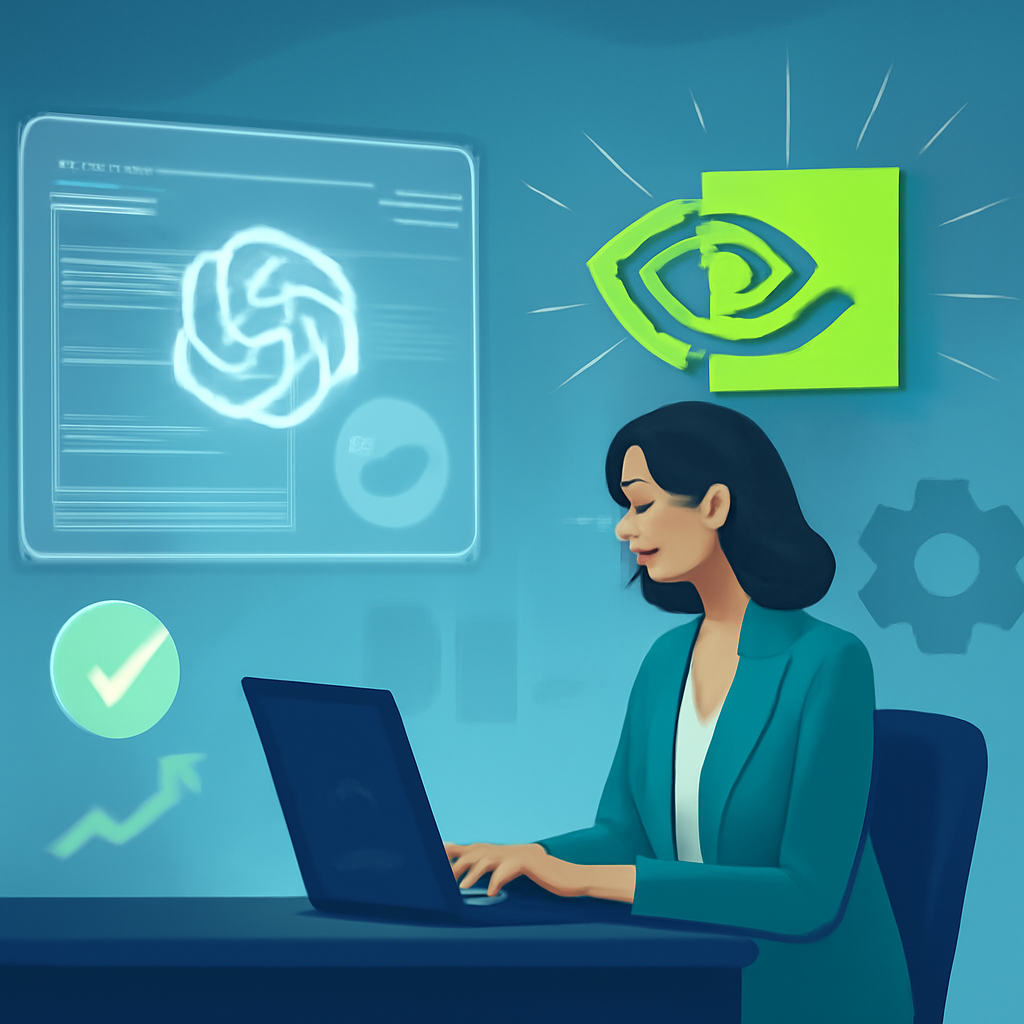
NVIDIA has begun integrating ChatGPT Work across multiple teams to streamline routine processes, turn external AI developments into prioritized actions and share repeatable practices across regions. The company says the tool helps convert high volumes of information into usable work, reducing manual analysis and freeing employees to devote more time to customer and partner engagement.
One clear example comes from Will Daney, a go-to-market strategist who supports global sales, business development and product leaders. Daney previously spent roughly 40% of his time on manual preparation for NVIDIA’s GTC conference—assembling account lists, tracking registrations and identifying follow-up tasks. To reduce that burden, he built a ChatGPT Work workflow that runs twice weekly and automates much of the event preparation.
Over a 12-week GTC planning cycle, Daney estimates the automated workflow saves about 16 hours per week. That time now goes toward direct collaboration with field teams and more tailored support for customers and partners. “With ChatGPT, I think the real key is that I’m able to take a workflow I’ve already developed and I’m able to automate it event over event with little to no overhead,” he said. Because he owns the workflow, Daney can adapt it as event requirements evolve without waiting for new software procurement or implementation.
Daney has also shared the underlying process with colleagues in other regions, who adapt the workflows for local events in San Jose, Taipei, Europe and Washington, DC. The portability of the workflows allows teams to apply a proven approach across different markets while preserving local control over adjustments and requirements.
On NVIDIA’s AI operations team in marketing, solutions architect Rachita Jain uses ChatGPT Work to manage rapidly changing external information. Jain’s workflow monitors selected external sources alongside NVIDIA’s internal context, identifies overlaps and distills that input into a handful of actionable signals each week. The workflow processes roughly 25–40 external AI updates and reduces them to about 5–8 meaningful items that can inform internal projects and discussions.
Jain also uses the integrated ChatGPT environment to accelerate movement from idea to working prototype. Within the same toolchain she handles ideation, code exploration and debugging, shortening timelines for some initiatives. She estimates projects that once required 2–3 weeks can now be completed in about 3–5 days using these combined workflows. “I think the biggest problem I’m trying to solve is information overload, because everything is moving so fast. It’s getting harder by the day to keep track of all the changes. And with ChatGPT, it becomes much simpler,” Jain said.
NVIDIA’s next step is to scale the workflows that already produce value. By turning specialized knowledge into reusable processes, teams across the company can adopt proven approaches while remaining in control of how those processes evolve. Shared workflows help connect external developments with internal priorities more quickly and extend AI-enabled ways of working to more employees.
Practical benefits are already visible in individual experiences. Daney described ChatGPT as “a force multiplier,” noting the automation reduces repetitive tasks and expands the reach of expertise through reusable, shareable workflows. Across NVIDIA, teams report the approach helps surface the most relevant signals from noisy information streams and reclaims employee time for customer-facing work.
As NVIDIA continues to operationalize ChatGPT Work, the emphasis is on scaling what works while preserving flexibility for teams to refine their own processes. The combination of automated routine work, distilled external intelligence and shareable workflows positions the company to move faster on priorities and allow staff to focus on higher-value interactions with customers and partners.
Source: Read the original source
Leave a Reply