OpenAI has expanded its resources for teachers with a localized version of the AI for Educators course and a new ChatGPT feature called Study Mode, designed to support active learning and classroom use. The moves, announced as part of a Teachers’ Day update, emphasize tools that assist teachers with planning and student engagement while keeping pedagogical judgment firmly in the hands of educators.
The AI for Educators course is now available in Brazilian Portuguese on OpenAI’s free OpenAI Academy platform. Presented for primary, secondary and higher education contexts, the course shows how generative AI can help with lesson planning, designing activities and assessments, and preparing communications. OpenAI frames the content as a practical introduction for educators who want to explore how AI might integrate with teaching workflows without replacing teachers’ decision-making.
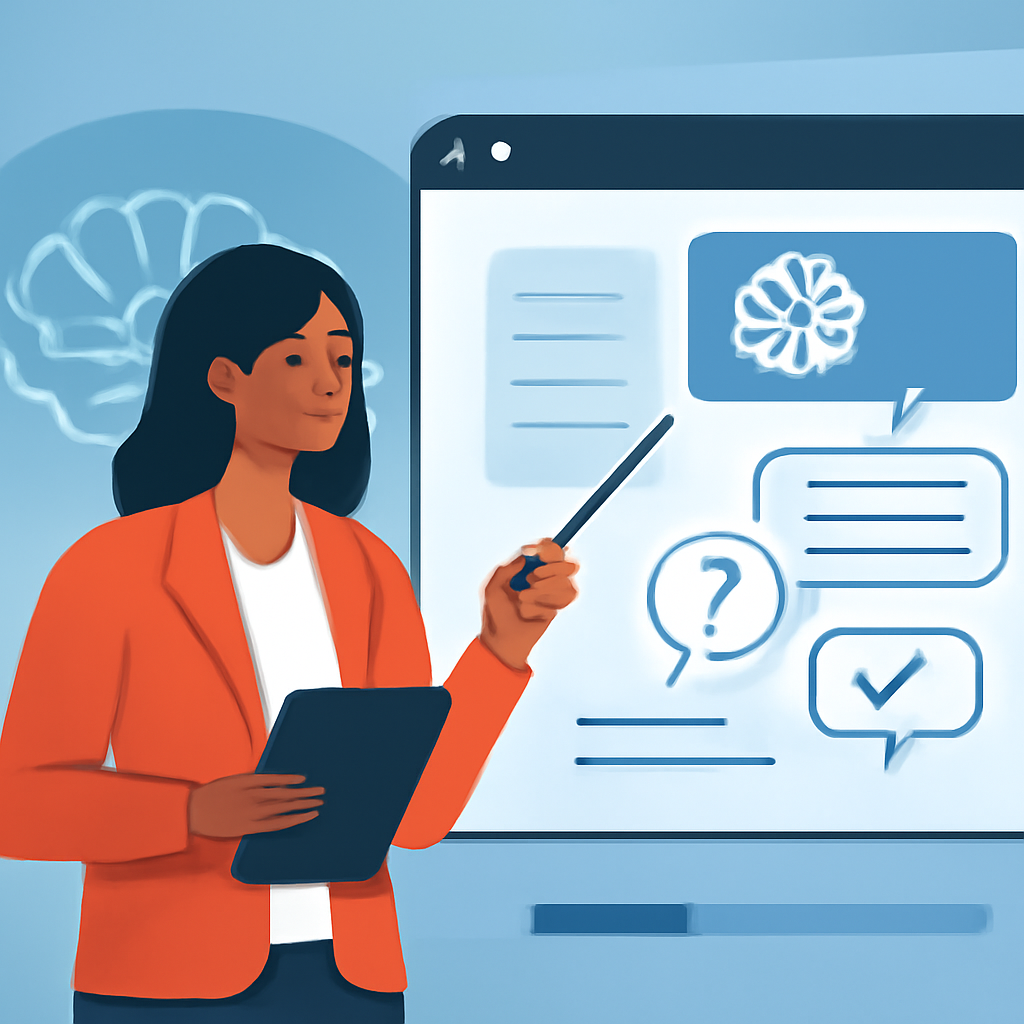
Alongside the localized course, OpenAI introduced Study Mode, a ChatGPT feature built to guide learners through topics one question at a time. Developed in collaboration with teachers, scientists and pedagogy experts, Study Mode supplies prompts, hints, explanations and comprehension checks that encourage active participation and reflection on reasoning. The design aims to move students through incremental questions and checks for understanding rather than presenting full answers immediately.
Users can enable Study Mode by selecting Study from the tools menu in ChatGPT. OpenAI described classroom and individual examples to illustrate how the feature can be applied. For instance, a student studying enzymes could ask the assistant to present single questions and wait for responses, enabling the student to identify areas that require review. Educators are invited to try Study Mode themselves to assess whether the posed questions and explanations align with classroom objectives and support student reasoning.
OpenAI suggested concrete classroom pairings that combine Study Mode with student-produced work. In one scenario, students investigating evaporation might use the tool to explore why clothes dry on a line, then independently write explanations and prepare a discussion question for class. Teachers could review these student responses to detect learning gaps and determine subsequent instructional steps. This approach positions Study Mode as a scaffold to promote reflection and to inform teacher judgment, rather than as a replacement for instructor-led assessment.
The company presented both the localized course and Study Mode as invitations to experiment. Educators are encouraged to explore the Brazilian Portuguese material, test Study Mode in varied teaching situations, and evaluate how these AI tools fit their classroom needs. OpenAI repeatedly underscored that technology can open new pathways for learning while emphasizing that teachers remain central to identifying important questions and guiding student understanding.
The localization of AI for Educators aims to make AI-focused professional learning more accessible to Portuguese-speaking teachers in Brazil. By placing the course on OpenAI Academy, the company made the material freely available to a broad audience across educational stages. The course’s stated focus on supporting planning, assessment design and communications reflects an effort to present practical classroom applications rather than theoretical instruction on AI alone.
Study Mode’s structure—asking one question at a time, offering hints and checking comprehension—reflects contemporary pedagogical priorities that favor active engagement and formative assessment. OpenAI’s collaboration with teachers and pedagogy experts in constructing the feature underlines an intent to align the tool with classroom practice, and the company’s examples highlight how Study Mode can complement teacher-led instruction and student-centered activities.
In sum, OpenAI’s update provides two complementary resources: a localized professional development course and a classroom-facing study tool. Both are positioned to assist educators in integrating generative AI into teaching tasks while preserving teacher authority over instructional decisions. OpenAI invites educators to experiment with the offerings and to judge for themselves how the tools support learning goals and reasoning in their own classrooms.
As schools and teachers explore these options, the company’s message is consistent: technology can help create new ways to learn, but teachers remain at the core of identifying meaningful questions and guiding student understanding.
Source: Read the original source
Leave a Reply