Amplitude Wave converts product telemetry into concrete improvements using a stack built largely on OpenAI models. The agent ingests analytics, session replays, user feedback and code to find opportunities, propose technical plans with acceptance criteria, and coordinate delivery with human teams and coding agents. Amplitude says Wave is roughly 80% powered by OpenAI models and has reduced the time to ship many improvements from about a month to one or two days.
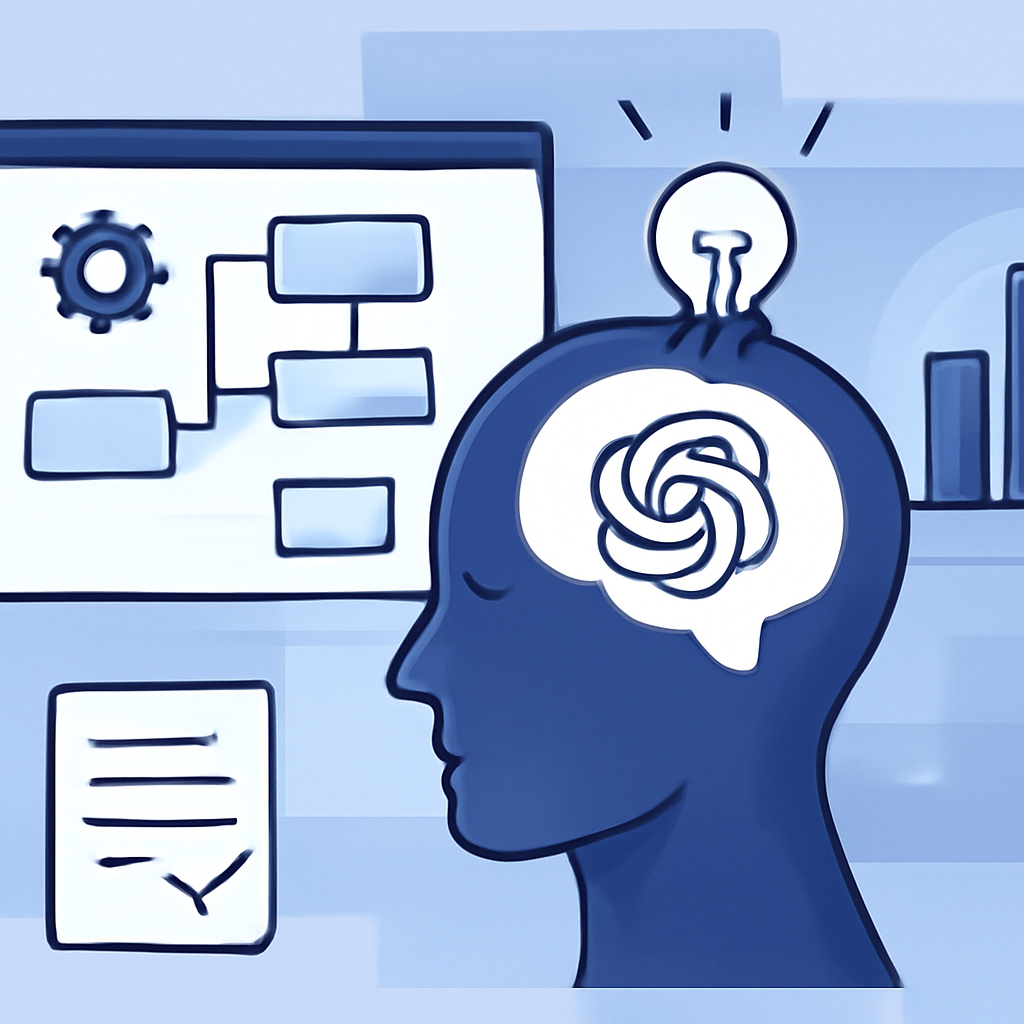
Wave begins when teams provide a target product area and the metrics they want to improve. The system then investigates behavior and performance signals, prioritizes promising opportunities, and produces concrete solutions that include clear acceptance criteria. For each proposed change, Wave tracks outcomes and feeds results back into subsequent discovery rounds, creating a closed loop that both validates and refines future recommendations.
Amplitude assigns different OpenAI models to specific tasks according to quality, latency and cost needs. The company reports that GPT-6.1 Sol is used for deep investigations and complex reasoning; GPT-6 Luna performs frequent, lower-cost activities such as scanning code and running repeat checks; and GPT-Image-2.5 Flare generates mockups using session replay screenshots as visual context. When a change is deemed ready, Wave can hand a technical plan to coding agents, including Codex, for implementation.
The system has already produced measurable results in internal tests. Amplitude examined Wave’s impact on its homepage suggestion cards, which are prompts intended to help users start conversations with an AI agent. In an analysis of 100 session replays, Wave observed that most users typed their own queries rather than using the suggestion cards. The agent recommended personalizing the cards based on recent charts, dashboards or the referring page and created a technical plan that preserved free typing and fell back to generic suggestions when context was unavailable.
After a short review and an A/B test that used a coding agent to implement the change, Amplitude reported that messages initiated through the homepage suggestion cards rose 160% relative to control after one day. The company described the example as evidence that modest interface changes, guided by agent analysis, can materially improve feature adoption.
Amplitude evaluates models against criteria such as reasoning quality, evidence grounding, tool compliance and recovery from failures, then assigns models to tasks accordingly. In internal evaluations, GPT-6.1 Sol scored 4.06 out of 5 overall for Wave’s Opportunity Investigator, outperforming three alternative models on investigation criteria and posting a median investigation time of 54 minutes.
For data science dispatches, Amplitude reported a GPT-6.1 Sol score of 67.5 out of 100 versus 69.3 for another leading model, with a mean cost per dispatch of $1.28 compared with $2.63. The company favored Sol for stronger tool-contract compliance, better estimation and uncertainty handling, and improved evidence grounding. For high-volume, lower-complexity checks, Amplitude uses GPT-6 Luna to reduce latency and cost.
On visual mockups, GPT-Image-2.5 Flare scored 80.3 out of 100 for solution wireframes in Amplitude’s evaluation, compared with 63.9 for a comparator model. That assessment covered communication quality, product fidelity, instruction adherence, legibility and visual coherence across 15 opportunities. These task-specific evaluations inform which models Wave calls for each stage of discovery, planning and delivery.
Amplitude maintains human control over releases by letting teams choose the level of automation. Bug fixes are often sent directly to coding agents, while larger features undergo human review. Among customer-launched experiments and feature changes that began as Wave recommendations, the company reports that one in four went live the same day the opportunity was surfaced, half launched in under four days and about two in three were live within a week.
Amplitude describes its long-term ambition as evolving toward self-improving products where agents take on increasing responsibility for both investigation and implementation as models improve. By automating routine discovery and delivery work, the company says engineering and product teams can focus on higher-level priorities while agents surface and help deliver many incremental improvements.
The Wave deployment illustrates a targeted approach to product automation: use the right model for each task, validate recommendations with experiments, and preserve human oversight where it matters. As Amplitude continues to tune model assignments and workflows, the company reports that the system has already shortened iteration cycles in practice and produced measurable lifts in user engagement on select surfaces.
Source: Read the original source
Leave a Reply