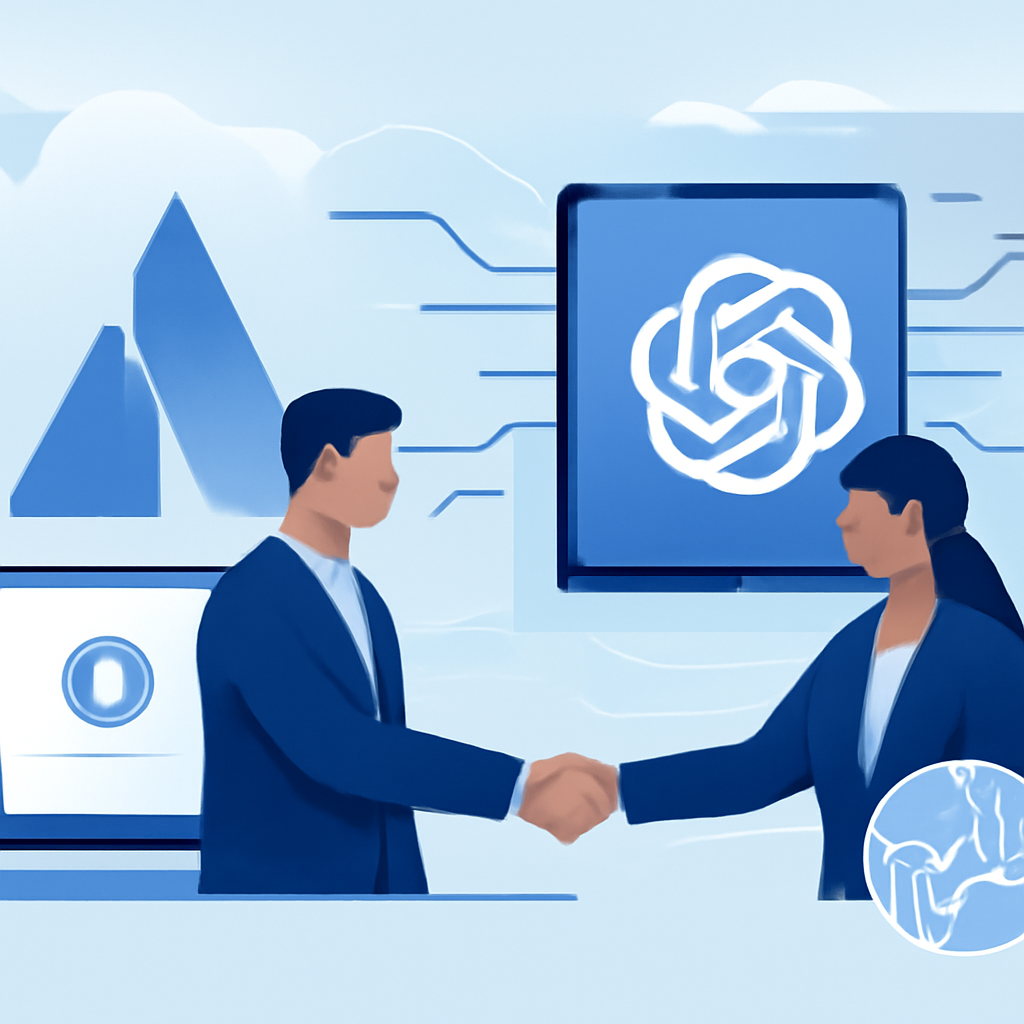
Atlassian and OpenAI have broadened their collaboration to bring advanced OpenAI frontier models into Atlassian’s suite of products, enabling more directly actionable AI-driven workflows. Central to the expanded agreement is the integration of GPT-6 Astra, alongside the GPT-5.6 series, into services that connect enterprise knowledge with automated agents across the Atlassian platform.
The partnership links OpenAI’s models with Atlassian’s Teamwork Graph, an enterprise context layer that maps people, projects, documents and decisions. By pairing that contextual layer with model intelligence through Rovo — a service that fuses OpenAI capabilities with Teamwork Graph data — Atlassian aims to move teams from information gathering to concrete recommendations and next steps. In practice, Rovo can draw on Jira tickets, Confluence content and related discussions to produce assessments and suggest actions, such as identifying engineering blockers or missed milestones tied to a launch.
Under the agreement, Atlassian receives expanded access to OpenAI’s frontier models, with the companies explicitly naming GPT-6 Astra and the GPT-5.6 series. This builds on work that began in 2023 and complements Atlassian’s existing adoption of OpenAI technologies, including Codex and ChatGPT Enterprise, within development workflows. Atlassian reports that more than 3,000 developers already use Codex in terminals, integrated development environments and code review processes; with Teamwork Graph context surfaced through plugins, those developers can access relevant work items and documentation while writing, testing and shipping code.
Atlassian is delivering this integration through a mix of plugins, command-line integrations and extensions that bring project information and documentation into model prompts subject to permissions. A recently launched plugin extension specifically makes Jira work items, Confluence content and people available in prompts for ChatGPT and Codex, so agents can generate responses grounded in a team’s actual task and document context. Atlassian Home also aggregates assigned work, recent Looms, projects and Bitbucket pull requests to supply quick situational context to users.
The partners are also exploring tighter integrations directly inside Jira to allow teams to assign tasks to AI agents, track agent progress, capture decisions and review results. Atlassian plans to pair these capabilities with DX, its platform for measuring developer productivity and engineering performance, so engineering leaders can assess metrics such as development speed and cycle time while retaining human oversight over decisions and outcomes.
Operational adoption is already part of the collaboration: OpenAI itself continues to use Jira to manage critical workflows. The stated goal of the partnership is to embed frontier intelligence into the tools organizations already use, so AI agents become a natural part of how teams plan, build and deliver work rather than a separate, siloed capability.
By combining the Teamwork Graph’s structured enterprise context with OpenAI’s models via Rovo, organizations may be able to shorten the loop between discovery and execution. For example, agents accessing project metadata and historical documentation could recommend next steps, highlight dependencies and surface owners for follow-up actions. Atlassian’s approach emphasizes permissioned access and integration points — plugins, CLI tools and product UI surfaces — so that model-powered assistance operates within existing access controls and workflows.
The inclusion of GPT-6 Astra and the GPT-5.6 series signals Atlassian’s and OpenAI’s intent to put recent frontier models to work across core business systems. While Atlassian has already embedded Codex and ChatGPT Enterprise into development toolchains, the expanded agreement extends model access more broadly across collaboration, planning and execution surfaces. The partners are positioning Rovo and the Teamwork Graph as the connective tissue that will let advanced models act on enterprise knowledge without displacing human responsibility.
As the integration progresses, Atlassian will focus on linking agent activity to measurable engineering outcomes through DX while preserving human review and oversight. For teams and leaders, the collaboration aims to make AI-driven suggestions and automated actions more contextually aware and operationally useful — from surfacing likely launch blockers to helping prioritize work based on documented decisions and project status.
The expanded agreement formalizes a trajectory that began in 2023 and reinforces a shared objective: to bring frontier intelligence into everyday tools so that model-powered agents help teams turn knowledge into action within the platforms they already use. GPT-6 Astra is central to that vision, and both companies say the integration will unfold through existing Atlassian product extensions and the Rovo service, with an emphasis on permissioned, contextual access and measurable impact.
Source: Read the original source
Leave a Reply