
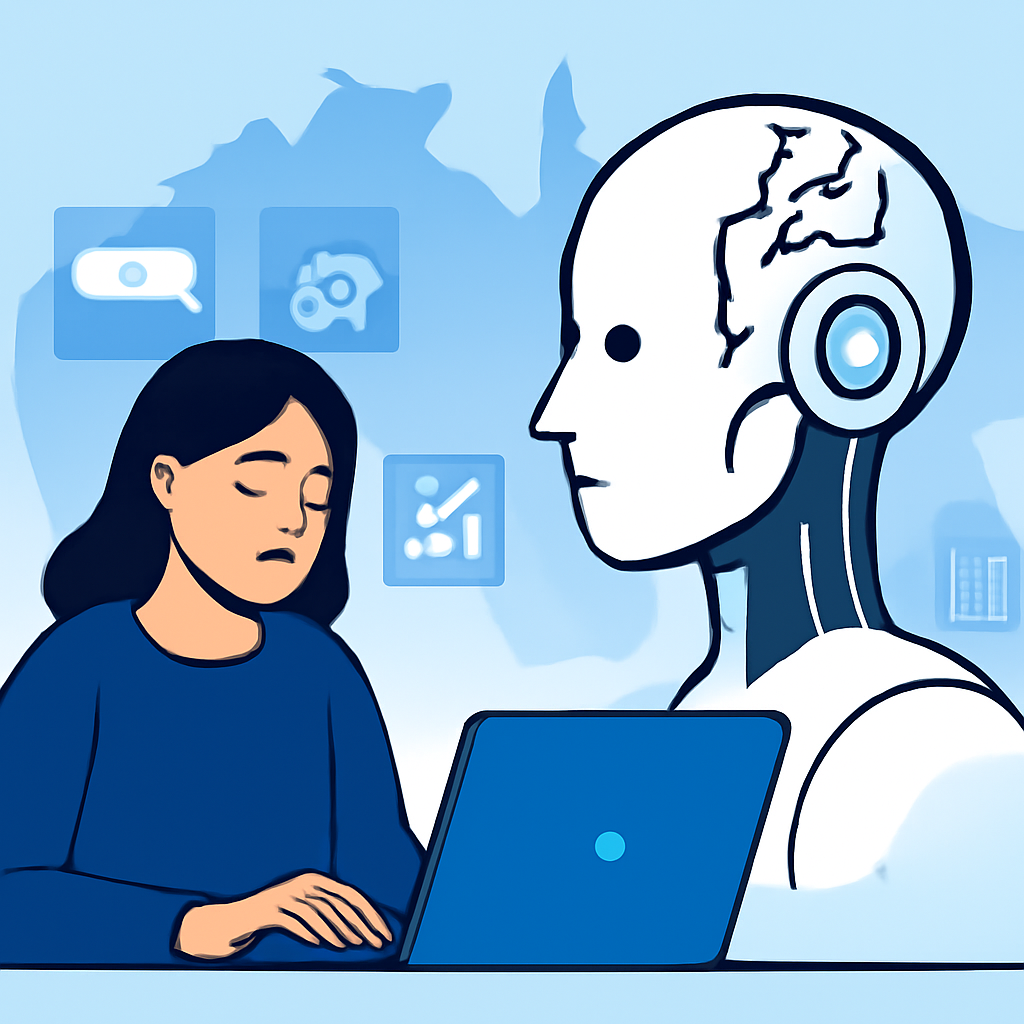
Australian universities are creating AI native graduates as institutions widen student and staff access to advanced generative AI tools and fold hands-on AI practice into teaching, assessment and industry partnerships.
New research commissioned by OpenAI and conducted by Pureprofile between 3–7 August 2026 surveyed 1,018 Australian university students and found strong existing use of AI and clear expectations for institutional support. The survey reported that 81% of students use AI several times a week and 33% use it multiple times each day. More than a quarter (28%) said they had already built an AI agent or assistant to support study, work or personal tasks. Students also expressed views on career impact: 61% said AI skills will be essential in their careers, 69% said AI literacy will be as fundamental as digital literacy, and 65% said AI skills would give Australian graduates an edge globally. Many participants signalled entrepreneurial intent, with 76% interested in starting a company or working for themselves and 68% believing AI will make launching a business easier.
Universities across Australia are responding with formal collaborations and staged rollouts of OpenAI technologies. The University of New South Wales (UNSW) plans to extend ChatGPT Edu to more than 80,000 students and staff and to integrate generative AI foundations and Codex into teaching, industry projects and hackathons. UNSW says the collaboration will also create links to internships, graduate roles and startups.
The University of Sydney is piloting ChatGPT Edu and intends a campus-wide rollout in Semester 1, 2027 after a trial phase. The university is also establishing a $1 million AI Sustainability Research and Innovation Fund to support research aligned with sustainability priorities. La Trobe University has granted ChatGPT Edu access to all 3,500 staff and plans universal access for its 45,000 students and staff in the first quarter of 2027. La Trobe is launching new degree pathways, including a Bachelor of AI Engineering (Honours) and an AI MBA, and has appointed a Pro Vice-Chancellor AI and a Chief AI Officer to lead an institution-wide AI strategy.
Adelaide University, formed through a recent merger, is embedding governed, scalable uses of AI from the outset. The institution is among the first in higher education to use OpenAI Daybreak Blue for authorised defensive security tasks such as vulnerability discovery, secure code review, malware analysis, incident response and patch validation.
A consistent theme across these initiatives is a focus on practice before it counts. Universities are emphasising hands-on experience so students can apply AI responsibly in professional contexts. La Trobe’s paramedicine program uses ChatGPT to generate clinical-scenario practice materials in which students interpret ECGs or triage simulated incidents. In teacher training, La Trobe uses a social robot called Fletch—powered by OpenAI models hosted on Microsoft Azure—to create realistic role-play scenarios that help trainee teachers practice challenging conversations with parents.
La Trobe has also opened an AI Business Studio to give students practical consulting experience, with the aim of preparing more than 1,000 students to work with small and medium enterprises on AI adoption by 2028. The university reports rapid uptake across use cases, ongoing training for staff and students, and steady month-on-month growth in active users.
Institutions are pairing access to tools with rules and guidance that clarify acceptable use in learning and assessment. UNSW has introduced a Can, Can’t, Must framework enabling educators to specify whether AI is permitted, prohibited or required for a given assessment, allowing students to practise using AI where appropriate while demonstrating foundational knowledge when needed. The University of Sydney is coupling ChatGPT access with a responsible AI framework and assessment approaches that combine supervised demonstrations of capability with open assessments that show effective AI use. La Trobe’s library offers free Responsible and Safe AI learning modules and plans to integrate AI skills training into 50 priority first-year subjects for Semester 1, 2027, alongside sector-specific modules for Education, Law and Health.
By widening institutional access to advanced tools and creating guided opportunities to practise, Australian universities aim to equip students with both practical AI skills and the judgment to apply them responsibly. These initiatives connect strong student demand, hands-on learning and industry links to prepare graduates for roles in research, established industries and new ventures. As routine study and work increasingly incorporate AI, universities are embedding these technologies into teaching, assessment and campus services so graduates leave with relevant, responsibly applied capabilities.
Source: Read the original source
Leave a Reply