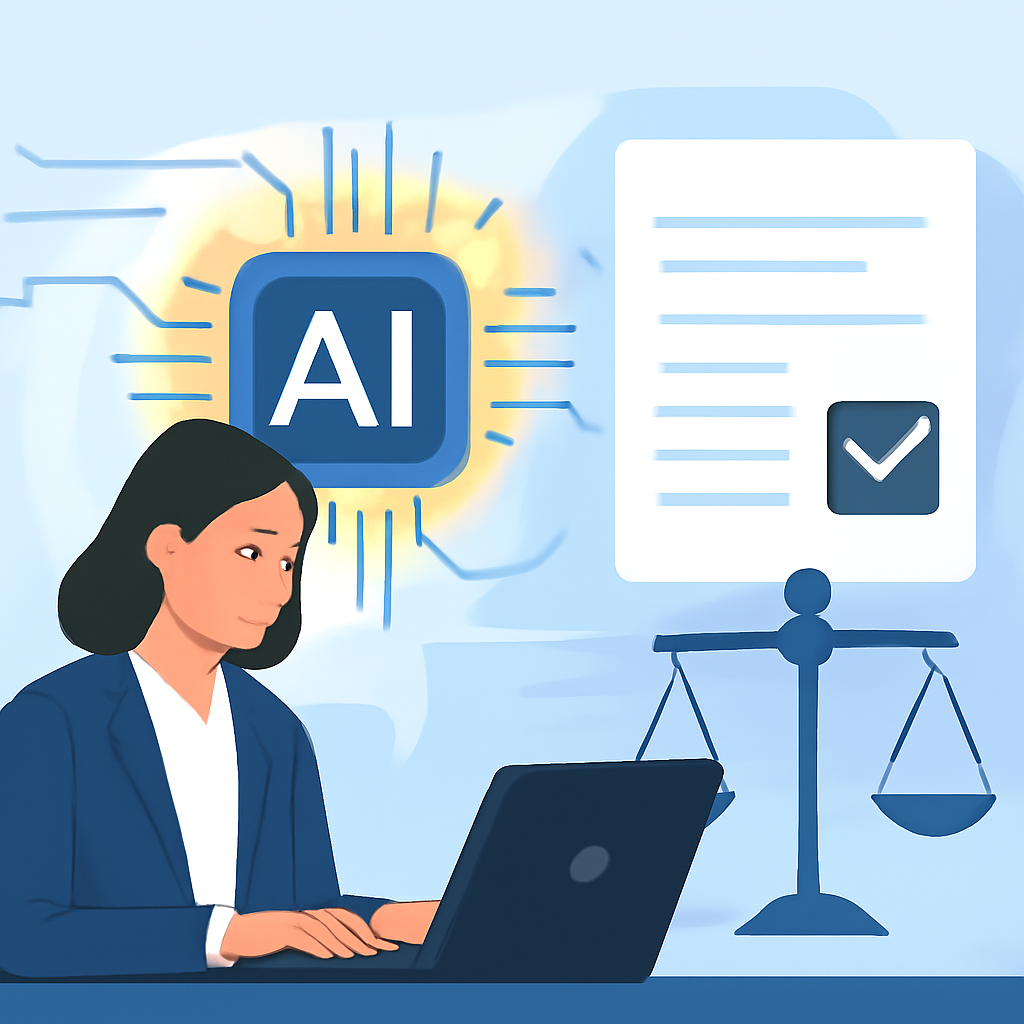
Legora’s agentic operating system embeds advanced OpenAI models directly into the daily workflows of legal teams to automate routine tasks, accelerate document review and broaden the scope of analysis lawyers can perform. Founded in Stockholm in 2023, the company—led by CEO and co-founder Max Junestrand—says its platform blends agentic task automation with large-scale review tools so legal teams can move faster while focusing human effort on higher-value judgment work.
OpenAI model releases have been central to Legora’s product roadmap. The company began experimenting when GPT-3.5 unlocked new capabilities, and today it uses OpenAI models across core workflows, along with ChatGPT Work and Codex in internal engineering and operations. Legora’s CTO, Jacob Lauritzen, describes an engineering approach where coding agents lets teams prototype many approaches in parallel—testing “20 solutions at the same time” and selecting the most effective option within days rather than committing long development cycles to a single idea.
That agentic design also speeds operational troubleshooting. Legora reports agents can comb through millions of lines of logs and pursue multiple hypotheses simultaneously, in some cases reducing the time from bug report to fix to around five minutes. The company aims to remain AI-native both in product and engineering practices, revisiting its roadmap on a biweekly cadence as models improve.
For in-house legal teams, the platform’s most tangible benefit has been reclaiming capacity spent on routine documents. General Counsel Emma Kadri Bergström says Legora’s internal legal playbook, built from historical non-disclosure agreements, enables the system to take an initial pass on incoming NDAs and flag out-of-parameter terms. According to Legora, the share of internal legal time devoted to such routine documents dropped from roughly 20% of capacity to under 1% after adopting the platform.
That freed capacity has supported rapid company activity: over the past year Legora expanded from three offices to 18, completed three financing rounds and made five acquisitions. The company also reports that agents surfaced relevant contract information during M&A diligence—work that might previously have been outsourced—so lawyers could review and interpret findings rather than perform the initial sweep themselves.
Legora positions its product as both a speed and quality improvement. Its Tabular Review workflow can analyse thousands of contracts across multiple queries in minutes, enabling lawyers to scrutinize larger deal sets rather than relying on manual sampling. The company argues that this wider coverage can surface risks manual review would miss.
Legora cites measurable customer outcomes to support its claims. One Fortune 100 client reportedly cut contract turnaround time by 90%, saved more than $20 million on external litigation and diligence costs, and regained roughly 9.5 hours per lawyer per week for higher-value tasks. The company also highlights headline internal gains: a greater-than-95% reduction in time spent reviewing NDAs for its own legal team and the same 90% faster contract turnaround figure for its major customer.
Beyond immediate productivity gains, Legora shares lessons for leaders adopting AI: lead by using the product; begin with clearly defined problems before introducing AI; cultivate internal champions; be prepared to rebuild components as models improve; and design for trust through rigorous evaluation and transparency. These recommendations reflect Legora’s experience iterating quickly on agentic workflows and integrating new model capabilities into existing processes.
Looking ahead, Legora’s roadmap seeks to expand the kinds of tasks agents can handle and make lawyer–AI collaboration more natural. CTO Jacob Lauritzen expects agents to take on longer-running, higher-context jobs—due diligence that spans millions of pages could run overnight so an analysis is ready for lawyer review the next morning. He also anticipates models becoming faster, enabling more interactive, real-time collaboration where lawyers and AI iterate together instead of treating AI as a one-shot tool.
For General Counsel Kadri Bergström, the broader promise is organizational: AI can reduce the risk that legal teams become a bottleneck and position them as strategic partners to the business. If Legora’s agentic operating system achieves its stated goals, legal teams could not only perform today’s work more efficiently but also take on analyses and reviews that capacity constraints previously made impractical—leaving lawyers to concentrate on strategy, judgment and other high-value decisions.
Legora’s stated approach—combining agentic automation, large-scale contract review and a product-led adoption playbook—illustrates one pathway for legal teams seeking to scale review, reduce external spend and redeploy lawyer time to more strategic tasks. The company continues to evolve its platform in step with model improvements, emphasizing both practical results and governance measures to build trust in automated legal workflows.
Source: Read the original source
Leave a Reply