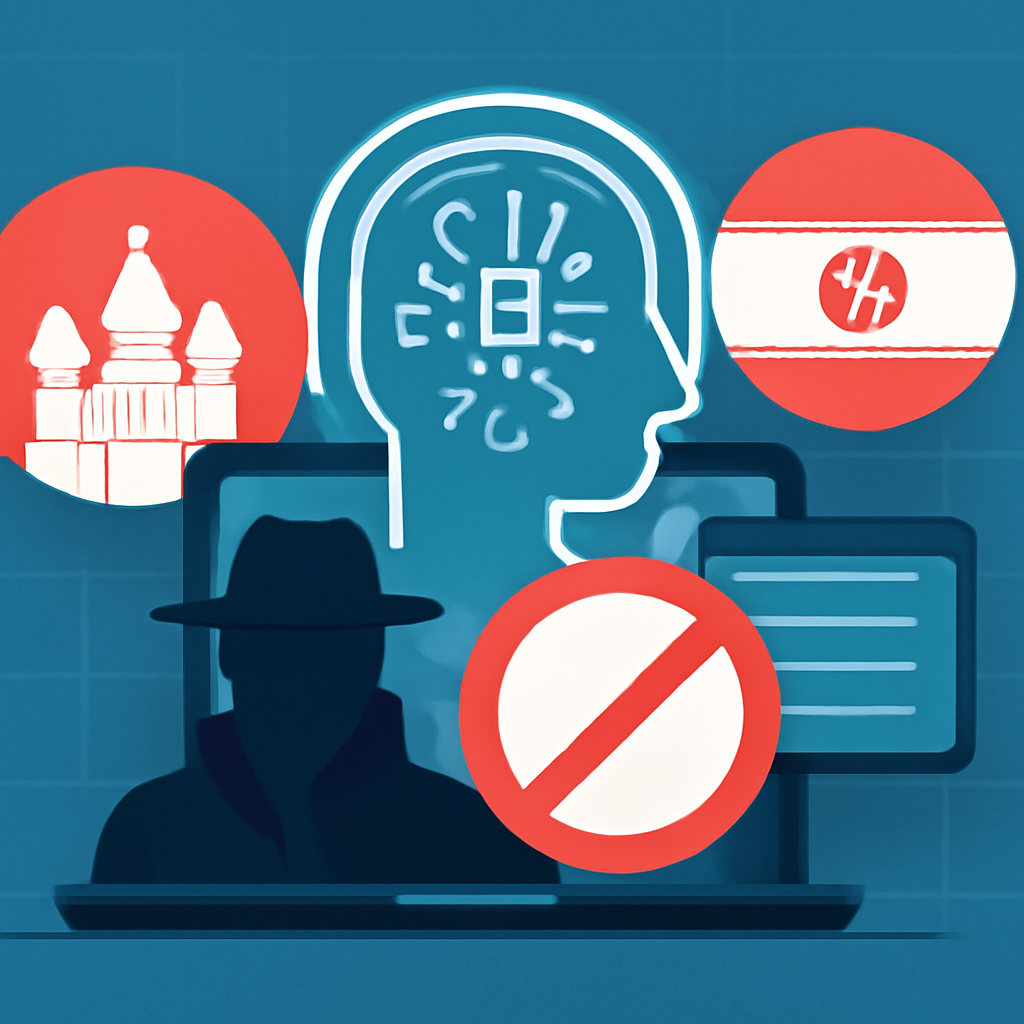
OpenAI announced it has disrupted two coordinated campaigns that used generative AI alongside traditional tactics to seed geopolitical messaging, describing them as AI-enabled false-front operations. The company said it banned clusters of ChatGPT accounts tied to a Russia-origin operation known as Dark Clark and an Iran-origin campaign labeled Bogus Bylines, and shared case information with relevant authorities as part of a broader effort to expose how adversaries are leveraging AI.
In its disclosure, OpenAI detailed how both operations blended human and technical methods. The company said the actors relied on its models primarily to draft internal reports, refine written materials, translate or adapt content for target audiences, and polish editorial pitches. Threat actors reportedly used VPNs to access the service. OpenAI framed the disruptions as ongoing work to surface abuse patterns and aid regulators, researchers and industry peers in understanding emerging threats.
The Russia-linked operation, which OpenAI called Dark Clark, ran a self-styled research organization called the Social Research Center (SRC) and used a fabricated manager persona, “Mia Clark.” According to the company, the SRC’s website hosted more than 60 articles, most of which appeared to be original content created by local staff who may not have known they were contributing to a Russian-linked influence campaign. OpenAI said it found evidence tying some of the activity to entities previously associated with Russian influence operations.
OpenAI described Dark Clark’s tactics as multi-dimensional and targeted across Latin America. The actors used ChatGPT to draft detailed internal reports that outlined covert influence activities, including plans to plant fabricated emails, doctored audio and video, and staged local events that could be amplified by media. The company cited corroborated instances reported in open sources: fake emails instructing Peruvian schools to hold events on Ukraine’s national Day of Cultural and Linguistic Diversity; fabricated audio attributed to a Ukrainian consul in Ecuador; and a false recording in Bolivia alleging a government would cut water supplies during protests. Some of those planted fakes prompted fact checks and official denials.
OpenAI assessed Dark Clark as a Category 5 event on its Breakout Scale, marking the first time the company has publicly reported disrupting an operation at that level. The Category 5 rating reflects the company’s evaluation of the operation’s scale and potential impact, according to OpenAI’s reporting.
The Iran-origin campaign, which OpenAI called Bogus Bylines, used seven deceptive journalist bylines to pitch long-form pieces to small and medium online outlets and to post coordinated batches of social-media replies. OpenAI said it banned a cluster of ChatGPT accounts that were prompted in Persian to produce content in Persian and English, using the models to refine articles, craft editorial pitches and generate comment batches.
OpenAI identified nearly 100 articles published or syndicated under the operation’s bylines across roughly a dozen outlets. The company reported the earliest tracked article in July 2025 and the latest in October 2026, with publication frequency increasing after the outbreak of the US–Iran conflict. OpenAI named the fake bylines it uncovered, including Ervin B. Hoskins, Noah Lamington, Sophia Gonzalez, Michael Harrison, Ericka Feusier, Jenny Williams and Alice Johnson. Using its Breakout Scale, the company placed the articles’ distribution at Category 4 and assessed the coordinated comment-reply activity at Category 2, noting that the social-media batches produced limited engagement in open-source searches.
OpenAI emphasized that AI in these operations increased scale, linguistic fluency and editorial capability, enabling workflows that were more efficient and capable of producing materials that could deceive editors, employees and audiences. The company stressed that while the operations resembled pre-AI complex influence campaigns, generative tools were used to draft internal reviews, translate and adapt content, and proofread or polish materials, effectively raising the operations’ editorial quality and reach.
Beyond technical details, OpenAI highlighted the value of disclosure in reducing the effectiveness of covert fronts. By publicly naming tactics, personas and networks involved, the company said it aims to curtail such operations and to provide information that helps regulators, research communities and industry partners improve mitigation and detection efforts. OpenAI also noted it shared relevant case information with authorities to support follow-up action.
As generative AI tools become more widely available, OpenAI’s report illustrates how state-linked and state-adjacent campaigns can incorporate models into broader influence workflows. The company’s disruption of these two campaigns underscores the evolving nature of information operations and the importance of cross-sector collaboration to detect, disclose and limit misuse of AI.
In conclusion, OpenAI’s disclosure of Dark Clark and Bogus Bylines offers a detailed look at how AI-enabled false-front operations operate in practice: combining fabricated personas, sham organizations and AI-assisted workflows to place deceptive content in mainstream outlets and social media. The reports aim to inform policymakers, researchers and platform operators as they develop strategies to respond to similar threats in the future.
Source: Read the original source
Leave a Reply