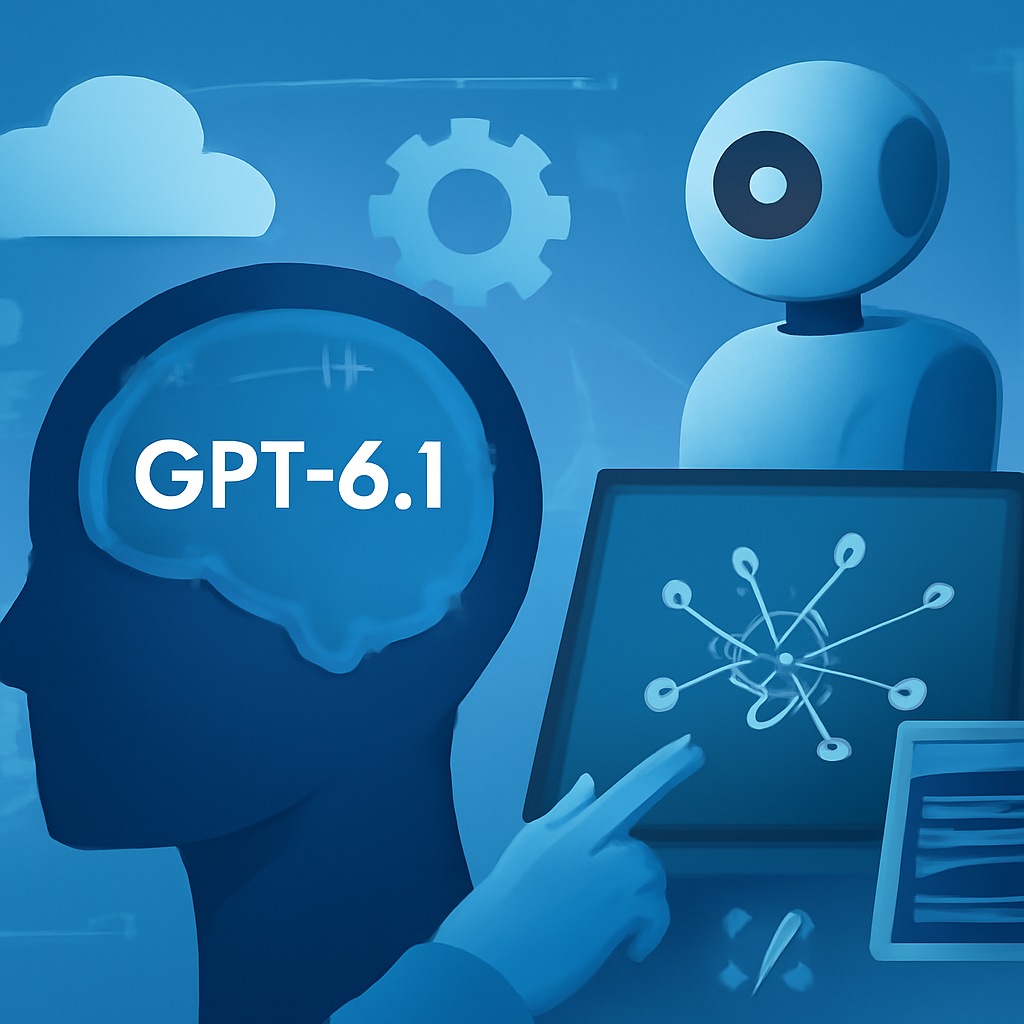
OpenAI used its largest developer event to date to push a broad set of model, agent and platform updates intended to change how teams and developers build with AI. At DevDay 2026 the company introduced model upgrades including GPT-6.1 and a low-latency variant called Astra Ultrafast, and unveiled always-on Dots agents designed to handle ongoing tasks and priorities on a user’s behalf.
The model announcements position GPT-6.1 and Astra Ultrafast as core improvements to capability and responsiveness across both consumer and developer-facing applications. OpenAI presented visuals identifying GPT-6.1 Sol alongside Astra Ultrafast, emphasizing a push to boost both model capability and speed to support new classes of real-time and long-running experiences.
A headline feature of the event was Dots, which OpenAI described as persistent agents that can run continuously to manage repeated, long-running or priority-driven work. Dots are intended as a new interaction model: instead of invoking the model for one-off requests, users can rely on agents that learn preferences and take ongoing responsibility for tasks. OpenAI signaled that Dots are available to Pro and Business Premium customers in eligible markets, while Enterprise, Education and Healthcare organizations can enable Dots in beta at the workspace-admin level; Dots remain off by default for those customers. In tandem with Dots, OpenAI said it will offer an Agents API and related tooling so developers can build, orchestrate and integrate persistent agent experiences into their apps and workflows.
Developer-focused tooling was another major theme. OpenAI expanded its Codex product to run on local machines, mobile devices and in the cloud, and demonstrated reusable development environments intended to accelerate onboarding and standardize team setups. The Codex suite shown during the recap includes cloud environments, a command-line interface, code review interfaces and a security cloud dashboard for findings. OpenAI said Codex availability spans Plus, Pro, Business, Healthcare, Education and Enterprise plans, making it broadly accessible across its paid tiers.
Beyond Codex, the company announced a Decisions API for programmatic decision-making and additional APIs to enable agent orchestration. These additions aim to let developers build more autonomous systems while keeping controls and integrations centralized through OpenAI’s platform.
OpenAI also opened more of the ChatGPT surface to external developers. Plugin extensions will let developers place interactive plugins in the ChatGPT sidebar and create custom panels and viewers for specific file types; these extensions are available to all plans. The company highlighted Sites, Pages and collaborative presentation editors that let teams create and share content inside ChatGPT, and introduced ChatGPT Spaces as a team workspace where teammates, ChatGPT and a user’s Dots can share knowledge and organize work. ChatGPT Spaces are available to Pro, Business and Enterprise users on desktop and web; some read-and-share features are already on mobile, with mobile creation and editing slated to arrive later.
Integration and ecosystem expansion were also emphasized. OpenAI said customers can use their ChatGPT plan allowances across integrations with 16 partners, naming Cognition’s Devin, Notion, Vercel, T3, OpenClaw and Dactyl among participants. Eligible usage on participating tools will count toward a user’s plan limits, and users can sign in to multiple tools with their ChatGPT account to streamline plugin connections. Identity sign-in was noted as available globally; plan usage integration is available to Plus and Pro users in participating tools.
The recap framed these changes as steps toward deeper collaboration between people and persistent AI. By expanding model families, introducing always-on Dots agents, extending Codex to more environments and unveiling new APIs and plugin surfaces, OpenAI emphasized improved developer control and broader third-party integration. The Agents API and Decisions API, together with persistent agent tooling, are aimed at letting developers create experiences that run continuously and interact with existing team workflows.
OpenAI provided clear availability details for the new features: Dots for Pro and Business Premium in eligible markets with admin-enabled betas for Enterprise, Education and Healthcare; Codex across most paid plans; plugin extensions available to all plans; and ChatGPT Spaces rolled out to Pro, Business and Enterprise on desktop and web with expanded mobile capabilities coming later. These distinctions underline a staged approach to bringing persistent agents and developer tooling into production settings.
As developers explore the new surface and APIs introduced at DevDay 2026, the updates set expectations for more native, integrated experiences that combine faster models, always-on agents and standardized tooling. For teams and builders, the announcements offer new paths to embed persistent AI into workflows while retaining control through platform-level integrations and administrative settings.
OpenAI’s DevDay 2026 recap concludes with the company positioning these announcements as foundational improvements to support both the 1.2 billion weekly users of ChatGPT and the ecosystem of developers who will build on top of it. The combination of model upgrades, persistent Dots agents, expanded Codex capabilities and new APIs marks a concerted push to make continuous, integrated AI a practical option for a wider range of users and organizations.
Source: Read the original source
Leave a Reply