
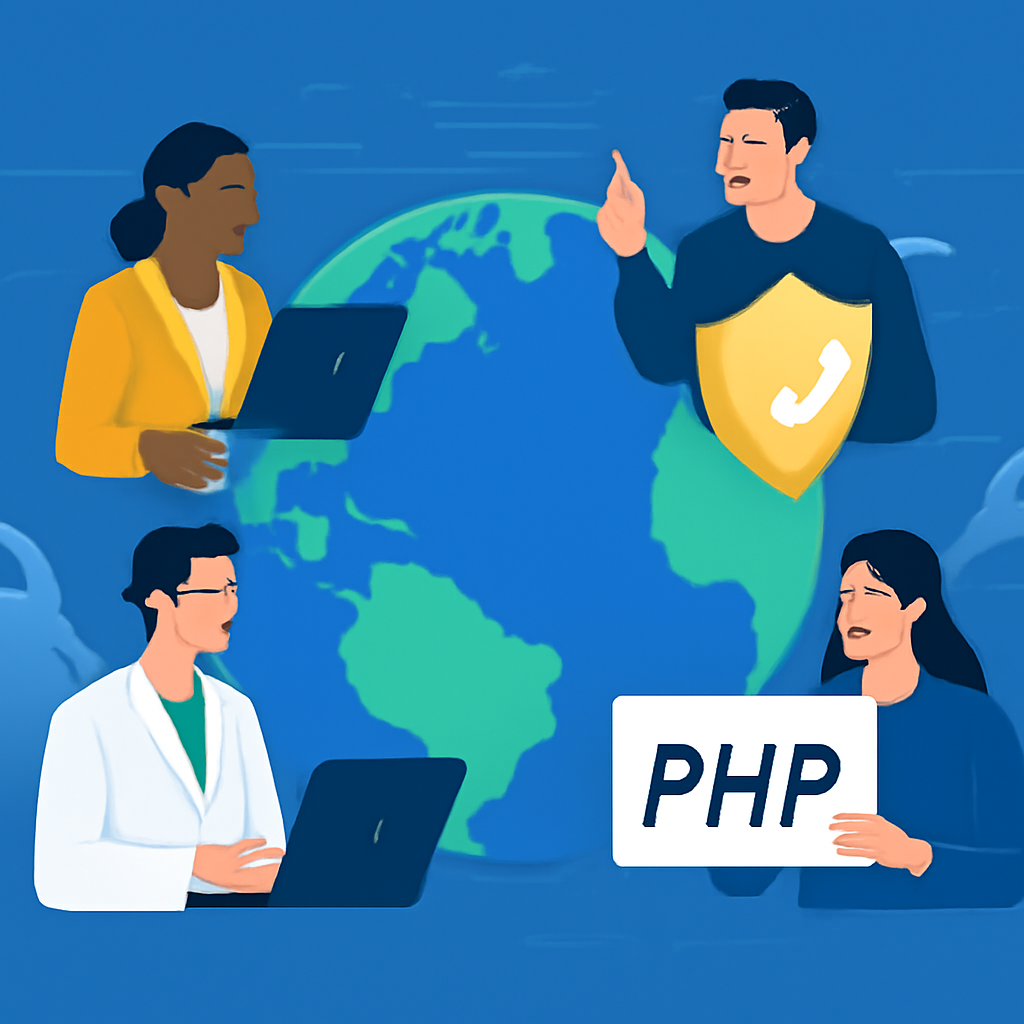
OpenAI’s Patch the Planet orchestrated a coordinated global effort to validate, patch and distribute protections for critical PHP flaws discovered by both AI and independent researchers. The response united PHP maintainers, security teams, cloud providers and research partners to prepare mitigations and updates before public disclosure, and to guide operators through verification and deployment.
The immediate response began when Calif, using GPT‑5.6 Sol under Patch the Planet, identified a critical defect in PHP. Wiz independently discovered and reported the same issue. PHP’s maintainers developed and published fixes; OpenAI, Wiz, Cloudflare and other partners contributed technical analysis, testing support and coordination to help prepare mitigations ahead of disclosure. To help operators identify affected installations, OpenAI released a PHP version checker as a Codex skill, and Patch the Planet’s public site aggregates the maintainers’ patch, upgrade instructions and partner research to assist operators in mitigation and verification.
OpenAI set out a five-stage coordinated disclosure framework intended to scale remediation in an era when powerful models can both surface serious bugs and accelerate exploit development. The stages begin with validating and fixing the upstream vulnerability: maintainers, researchers and key technical partners confirm the defect, assess impact and produce a patch, including adversarial testing with frontier models to search for bypasses and variants. Next, affected organizations are given time to act: maintainers determine which distributors, hosting providers and security teams require advance notice so they can adapt fixes, test mitigations and prepare detection rules.
The third stage involves coordination with government partners to help alert and protect critical infrastructure. In the PHP response, OpenAI engaged U.S. entities including the White House’s Super Intelligence Force, the Office of the National Cyber Director and CISA, while also working with international partners to broaden outreach. The fourth stage prepares updates across affected products: maintainers and downstream distributors ready backports, provider mitigations and service updates as guidance stabilizes. The final stage publishes public guidance and supports deployment once a patch is available, enabling operators to assess exposure, find authoritative updates or interim mitigations, and verify deployments while response teams continue to monitor and assist.
OpenAI emphasizes balancing the sensitivity of technical details against the protection they enable; limited or staged sharing can give defenders time to prepare while reducing leak risk. The framework calls for reassessing disclosure timelines if there is evidence of exploitation, leaks or disclosures that increase urgency.
The report also highlights the resource constraints facing many open-source projects. PHP and other widely used projects are often sustained by small teams that need help triaging reports, testing fixes across releases and preparing reliable updates. To bolster capacity, OpenAI said it is providing funding, model access and engineering assistance, including subscriptions for maintainers via Codex for OSS, sponsorships such as support for the Rust Foundation, and hands-on support through Patch the Planet.
As part of bolstering frontline defenses, OpenAI committed $1 billion in subsidized Daybreak access under Daybreak for Frontline Defenders, aimed at organizations with limited security resources that protect essential services. The company is also calibrating blocking classifiers for Daybreak to reduce misuse risk, while noting trade-offs that can impede legitimate security work.
OpenAI characterized the PHP vulnerabilities as among the most impactful security issues in recent memory because of PHP’s broad deployment. To its knowledge, frontier AI found these vulnerabilities before attackers did, creating a temporary Defender’s Window that allowed defenders to prepare patches and protections ahead of disclosure. Beyond the immediate response, OpenAI framed the episode as an opportunity to apply AI and other approaches to strengthen software foundations: choosing safer defaults, migrating critical components to memory‑safe languages, applying formal verification to commonly used components, and improving sandboxing to limit damage from future vulnerabilities.
Patch the Planet invited feedback from maintainers, researchers, response teams and operators to refine the proposed framework. Specific areas of interest include appropriate disclosure windows, criteria for emergency patching, early‑notice practices, and strategies for secure‑by‑default downstream packages. The Patch the Planet website compiles disclosures and guidance so operators can find updates and validate deployments as they apply fixes.
Operators running PHP are advised to apply the available fixes and follow the guidance aggregated by maintainers and partners. The coordinated effort around these critical PHP flaws illustrates how model-based discovery, independent research, maintainer-led fixes and infrastructure provider coordination can work together to reduce risk and accelerate responsible remediation when serious vulnerabilities are found.
Source: Read the original source
Leave a Reply