
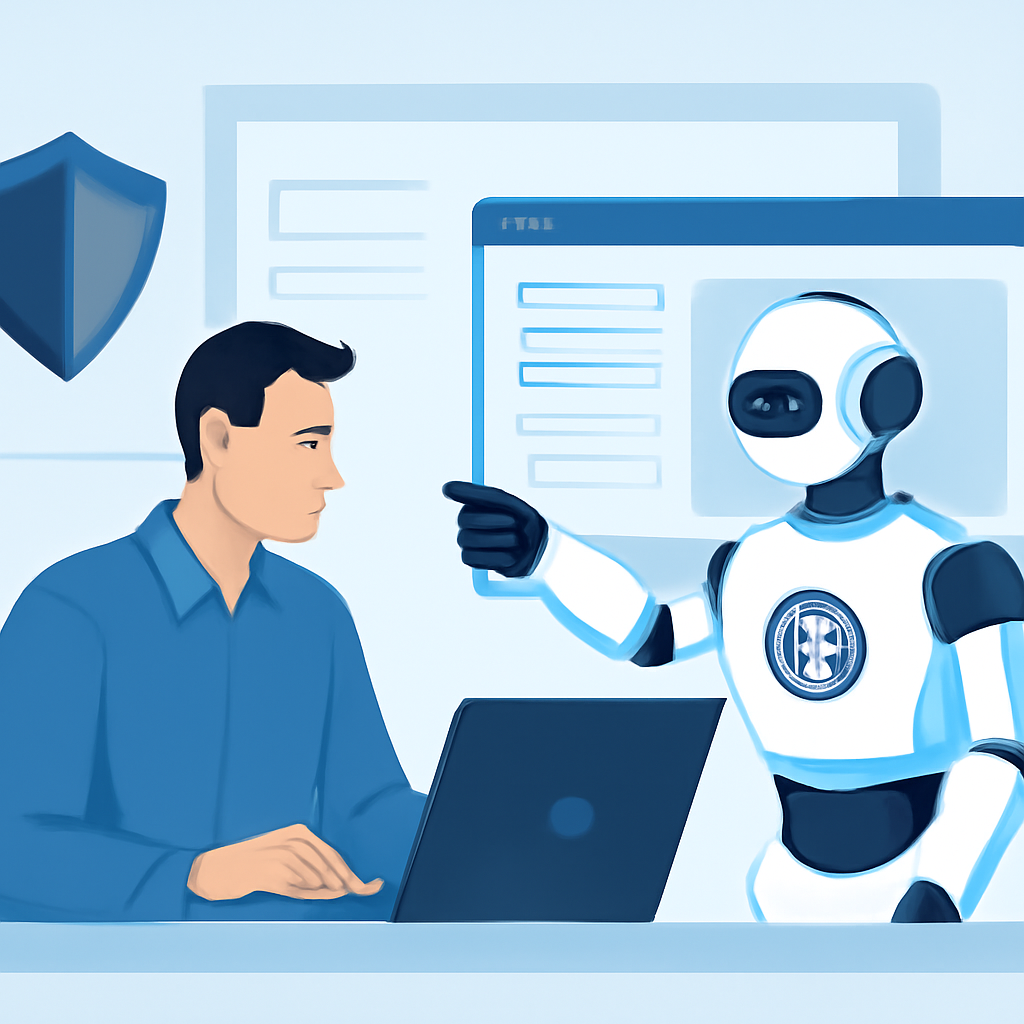
Shield is using OpenAI technology to reduce the manual burden of interacting with older IT systems by assigning routine interactions to autonomous agents. In a customer story published on OpenAI’s website, Shield describes how Forge agents operate inside legacy portal workflows so technicians can hand off routine portal work and devote more time to cases that require human judgment and technical expertise.
The Forge agents act directly within existing portals to handle navigation and procedural steps that have long consumed technician time. These agents take on repetitive interface tasks — opening menus, following step-by-step procedures, and completing routine handoffs — while technicians retain responsibility for decisions that depend on context, experience, and human assessment. According to Shield’s account, the approach is intended to reduce the amount of manual portal interaction required of IT staff.
Shield frames the deployment as an accommodation to the realities of enterprise IT, where legacy portals and older systems often remain in place and require substantial manual effort for everyday operations. By introducing agents that can execute procedural tasks inside those systems, Shield aims to remove the need for technicians to perform repetitive clicks and navigation, allowing them to concentrate on troubleshooting, escalation, and judgement-driven work that cannot be automated.
The customer story emphasizes the agents’ role in handoff scenarios. Rather than replacing technicians, the Forge agents are presented as tools that enable a clearer division of labor: automation of predictable, rule-based steps and retention of human oversight for ambiguous or complex issues. In practical terms, Shield’s description suggests that technicians can redirect time previously spent on portal mechanics toward tasks where human expertise is essential.
Shield’s use case highlights how organizations can integrate AI-driven agents into existing workflows without immediately overhauling backend systems. The agents operate within the UI of legacy portals, performing the procedural sequences that previously required direct human manipulation. Because the customer story focuses on the agent behavior inside the portals, it describes a workflow-level change rather than a replacement of core legacy infrastructure.
This workflow-centric view is significant for IT teams that continue to rely on aging systems. Many enterprises face environments where the cost and risk of replacing legacy systems are prohibitive, yet the day-to-day work that those systems demand remains time-consuming. Shield’s narrative positions Forge agents as a way to mitigate the operational friction of those environments by automating navigation and predictable processes while preserving human responsibility for judgment and exception handling.
Shield’s account on OpenAI’s site frames the goal in terms of enabling technicians to spend more time on cases that require human decision-making. The agents undertake procedural handoffs and repetitive interactions, and technicians are freed to focus on diagnosis, escalation paths, and other tasks that benefit from human context and experience. The customer story thus presents the deployment as a reallocation of human effort away from routine interface work and toward higher-value activities.
The Shield example underscores a broader pattern in enterprise automation: using AI agents to shoulder low-level, high-volume work within existing systems so that skilled staff can concentrate on tasks that make use of human reasoning. Shield’s description stops short of presenting quantitative outcomes in the customer story, instead focusing on the operational shift and the intended benefit of concentrating technician time on decision-centric work.
As enterprises weigh ways to modernize operational processes without wholesale system replacement, implementations like Shield’s Forge agents illustrate one path: augmenting technician workflows by embedding intelligent agents into legacy portals to manage procedural steps. That approach aims to preserve human oversight while reducing time spent on repetitive tasks.
Shield’s customer story appears on OpenAI’s website and provides a narrative of the deployment and its purpose. For organizations managing entrenched legacy systems, Shield’s account offers an example of how OpenAI-powered agents can be applied to internal workflows to reassign routine portal work to automation and allow technicians to focus on issues that need human judgment.
Source: Read the original source
Leave a Reply